
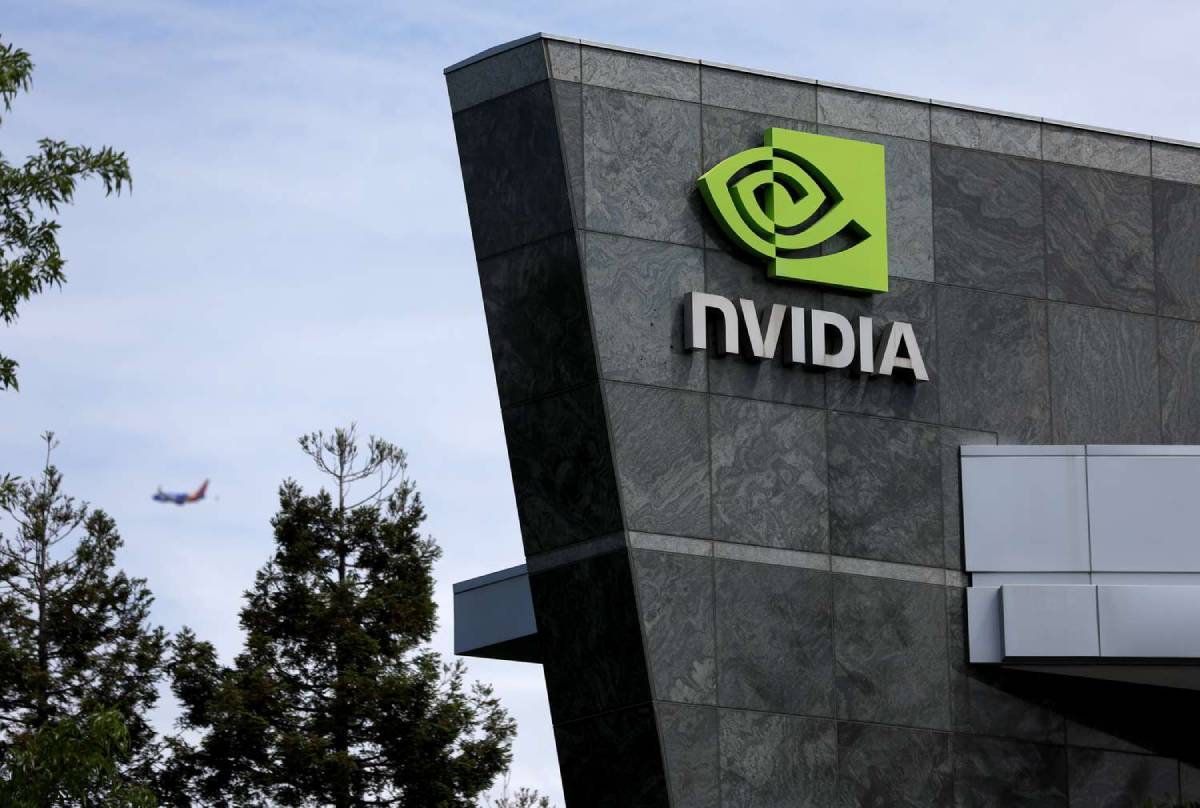
Nvidia’s Meteoric Rise Redefines the Balance of Power in the Global AI Economy

Looking ahead, decision-makers will watch whether Nvidia can sustain its lead as competitors and sovereign-backed chip programs scale up. Key uncertainties include regulatory intervention.

January 19, 2026
|

A major development unfolded as leading technology observers spotlighted Nvidia’s extraordinary rise from graphics specialist to the backbone of the global AI economy. The discussion underscores how Nvidia’s dominance in AI computing is reshaping markets, corporate strategies, and geopolitical competition around artificial intelligence infrastructure.

Nvidia’s transformation has been driven by its near-monopoly in advanced AI chips powering data centers, cloud platforms, and generative AI models. Demand for its GPUs has surged as enterprises, governments, and hyperscalers race to deploy large-scale AI systems. Industry analysts highlight Nvidia’s integrated ecosystem hardware, software, and developer tools as a critical competitive advantage. The company’s valuation surge reflects investor confidence in sustained AI-driven growth, while its supply chain influence has expanded across Asia, the U.S., and Europe. Meanwhile, competitors and policymakers are grappling with the strategic implications of Nvidia’s central role in AI infrastructure.

The development aligns with a broader trend across global markets where artificial intelligence has become a core driver of economic and strategic power. Over the past decade, Nvidia quietly positioned itself at the intersection of gaming, high-performance computing, and machine learning. As generative AI exploded into the mainstream, Nvidia’s GPUs emerged as the default engine for training and deploying advanced models. This shift has coincided with intensifying U.S.–China technology competition, export controls on advanced chips, and rising concerns about supply chain concentration. Historically, platform-defining companies such as Intel in CPUs or Microsoft in operating systems have shaped entire eras of technology. Nvidia’s rise suggests AI hardware may now represent the most consequential platform of the next economic cycle.

Technology analysts increasingly describe Nvidia as the “infrastructure layer” of the AI revolution. Commentators note that while software breakthroughs often capture headlines, it is Nvidia’s compute power that enables them at scale. Industry experts argue that Nvidia’s CUDA software ecosystem has locked in developers, making switching costs prohibitively high for rivals. Academic and market observers also caution that such dominance could attract regulatory scrutiny over time, particularly as governments assess AI’s societal impact. Corporate leaders emphasize that Nvidia’s roadmap spanning next-generation chips and AI-optimized systems positions it years ahead of competitors. The consensus among experts is that Nvidia’s influence now extends beyond technology into economics, national security, and global industrial policy.

For global executives, Nvidia’s dominance could redefine procurement strategies, capital allocation, and digital transformation timelines. Companies reliant on AI must navigate supply constraints and pricing power concentrated in a single vendor. Investors face both opportunity and risk as AI infrastructure becomes increasingly central to market valuations. Policymakers, meanwhile, must balance innovation with resilience, considering whether overreliance on one company poses strategic vulnerabilities. Governments may accelerate domestic chip initiatives, subsidies, and partnerships to counterbalance Nvidia’s influence. The shift underscores how AI hardware has become a policy issue, not just a commercial one.

Looking ahead, decision-makers will watch whether Nvidia can sustain its lead as competitors and sovereign-backed chip programs scale up. Key uncertainties include regulatory intervention, technological disruption, and geopolitical constraints on chip exports. What remains clear is that Nvidia has moved from industry player to structural pillar of the AI age one whose trajectory will shape markets, policies, and innovation strategies for years to come.

Source & Date

Source: Daily Northwestern
Date: January 15, 2026

  • Featured tools
Twistly AI
Paid

Twistly AI is a PowerPoint add-in that allows users to generate full slide decks, improve existing presentations, and convert various content types into polished slides directly within Microsoft PowerPoint.It streamlines presentation creation using AI-powered text analysis, image generation and content conversion.

#
Presentation
Learn more
Symphony Ayasdi AI
Free

SymphonyAI Sensa is an AI-powered surveillance and financial crime detection platform that surfaces hidden risk behavior through explainable, AI-driven analytics.

#
Finance
Learn more

Learn more about future of AI

Join 80,000+ Ai enthusiast getting weekly updates on exciting AI tools.
Thank you! Your submission has been received!
Oops! Something went wrong while submitting the form.

Nvidia’s Meteoric Rise Redefines the Balance of Power in the Global AI Economy

January 19, 2026

Looking ahead, decision-makers will watch whether Nvidia can sustain its lead as competitors and sovereign-backed chip programs scale up. Key uncertainties include regulatory intervention.

A major development unfolded as leading technology observers spotlighted Nvidia’s extraordinary rise from graphics specialist to the backbone of the global AI economy. The discussion underscores how Nvidia’s dominance in AI computing is reshaping markets, corporate strategies, and geopolitical competition around artificial intelligence infrastructure.

Nvidia’s transformation has been driven by its near-monopoly in advanced AI chips powering data centers, cloud platforms, and generative AI models. Demand for its GPUs has surged as enterprises, governments, and hyperscalers race to deploy large-scale AI systems. Industry analysts highlight Nvidia’s integrated ecosystem hardware, software, and developer tools as a critical competitive advantage. The company’s valuation surge reflects investor confidence in sustained AI-driven growth, while its supply chain influence has expanded across Asia, the U.S., and Europe. Meanwhile, competitors and policymakers are grappling with the strategic implications of Nvidia’s central role in AI infrastructure.

The development aligns with a broader trend across global markets where artificial intelligence has become a core driver of economic and strategic power. Over the past decade, Nvidia quietly positioned itself at the intersection of gaming, high-performance computing, and machine learning. As generative AI exploded into the mainstream, Nvidia’s GPUs emerged as the default engine for training and deploying advanced models. This shift has coincided with intensifying U.S.–China technology competition, export controls on advanced chips, and rising concerns about supply chain concentration. Historically, platform-defining companies such as Intel in CPUs or Microsoft in operating systems have shaped entire eras of technology. Nvidia’s rise suggests AI hardware may now represent the most consequential platform of the next economic cycle.

Technology analysts increasingly describe Nvidia as the “infrastructure layer” of the AI revolution. Commentators note that while software breakthroughs often capture headlines, it is Nvidia’s compute power that enables them at scale. Industry experts argue that Nvidia’s CUDA software ecosystem has locked in developers, making switching costs prohibitively high for rivals. Academic and market observers also caution that such dominance could attract regulatory scrutiny over time, particularly as governments assess AI’s societal impact. Corporate leaders emphasize that Nvidia’s roadmap spanning next-generation chips and AI-optimized systems positions it years ahead of competitors. The consensus among experts is that Nvidia’s influence now extends beyond technology into economics, national security, and global industrial policy.

For global executives, Nvidia’s dominance could redefine procurement strategies, capital allocation, and digital transformation timelines. Companies reliant on AI must navigate supply constraints and pricing power concentrated in a single vendor. Investors face both opportunity and risk as AI infrastructure becomes increasingly central to market valuations. Policymakers, meanwhile, must balance innovation with resilience, considering whether overreliance on one company poses strategic vulnerabilities. Governments may accelerate domestic chip initiatives, subsidies, and partnerships to counterbalance Nvidia’s influence. The shift underscores how AI hardware has become a policy issue, not just a commercial one.

Looking ahead, decision-makers will watch whether Nvidia can sustain its lead as competitors and sovereign-backed chip programs scale up. Key uncertainties include regulatory intervention, technological disruption, and geopolitical constraints on chip exports. What remains clear is that Nvidia has moved from industry player to structural pillar of the AI age one whose trajectory will shape markets, policies, and innovation strategies for years to come.

Source & Date

Source: Daily Northwestern
Date: January 15, 2026

Promote Your Tool

Copy Embed Code

Similar Blogs

January 23, 2026
|

Intel Faces AI Data Center Supply Crunch, Shares Slide 13%

Intel reported that its current production capacity is insufficient to meet skyrocketing demand from hyperscale data centers deploying AI workloads. Short-term supply constraints have affected new orders.
Read more
January 23, 2026
|

Johansson & Blanchett Support Campaign Accusing AI Firms Theft

A major development unfolded today as Scarlett Johansson and Cate Blanchett publicly endorsed a campaign alleging that AI companies are misappropriating creative content. The move highlights rising tensions.
Read more
January 23, 2026
|

OpenAI Faces Strategic Uncertainty Amid Investor Leadership Concerns

Noble, a renowned tech investor, publicly questioned CEO Sam Altman’s strategic decisions, citing risks tied to rapid scaling, competitive pressures, and operational governance.
Read more
January 23, 2026
|

Infosys Identifies Financial Services as Primary Catalyst for AI Growth

The CEO emphasized partnerships with global banks, insurers, and fintech firms to co-develop AI solutions tailored to sector-specific challenges. Investments in AI platforms, cloud integration.
Read more
January 23, 2026
|

Fossil fuels are a crutch: How AI’s unlikely winner could be renewable energy

AI applications are streamlining energy production, storage, and distribution in solar, wind, and battery systems, improving predictive maintenance and grid management. Several AI startups.
Read more
January 23, 2026
|

Apple Explores AI Pin with Cameras, Microphones, Next-Gen Wearable

Apple aims to leverage its ecosystem iOS, WatchOS, and AirPods for seamless connectivity, creating a cohesive experience across devices. Competitors in AI wearables, including Google, Meta, and emerging startups.
Read more